
Menu
Same-Day Service Available!

Tile and grout cleaning in Old Hickory, Tennessee can feel like a losing battle, especially in bathrooms. Warm showers, daily humidity, and tight ventilation turn grout lines into magnets for soap scum, body oils, and everyday grime. Meanwhile, hard water minerals can leave a dull film on tile and make grout look darker than it really is. Bathrooms also collect fine dust and lint, which mixes with moisture and clings to grout like a paste.
Plenty of people reach for strong bleach, heavy fumes, or abrasive powders when grout looks stained. Harsh chemicals can irritate your nose and throat, and some products can wear down grout over time or discolor certain tiles. Scrubbing too aggressively can also rough up the grout surface, which makes it easier for future dirt to stick.
Our team here in Old Hickory focuses on tile and grout cleaning methods that feel practical and family-safe, because bathrooms should feel fresh without turning your home into a science lab. We stick to smart steps, gentle tools, and residue-aware choices. A big part of keeping grout looking better is avoiding sticky buildup and using the right cleaner for the surface, because the wrong approach can create a cycle where things look clean for a day, then get grimy again.
For more than 30 years, we’ve built our cleaning philosophy around safer choices, soap-free results, and a customer-first mindset that puts your home comfort first. Safe-Dry_Main_Website_Info Bathrooms are a perfect place for that philosophy, because strong odors and heavy residue show up quickly when the wrong products get used.
Even when you clean without harsh chemicals, the goal still stays the same: lift the grime off the tile, loosen what’s trapped in the grout, and remove it instead of smearing it around. Cleaning first is also key, because dirt and buildup can block products from working the way you expect. The CDC explains that cleaning removes dirt and lowers germs on surfaces, and it’s an important first step before you ever think about sanitizing.
In this guide, we’ll walk you through a 10-step, bathroom-safe plan that uses gentle, effective options, plus clear notes on what’s safe vs what’s risky. Keep reading, because the small details, like the brush you choose and the rinse you don’t skip, are usually what make grout go from “still looks dirty” to “finally looks right.”

Start by figuring out what you’re cleaning. Most bathrooms have ceramic or porcelain tile, and those surfaces handle gentle cleaning well. Natural stone is different, and certain common DIY ingredients can cause problems.
Skip harsh or risky choices like straight bleach fumes in tight bathrooms, abrasive scrub pads that can scratch, and anything highly acidic on stone. Tile may look tough, but the wrong cleaner can dull the finish or break down protective sealers.
Quick check:
Ceramic/porcelain: usually fine with mild, non-abrasive cleaning.
Natural stone: needs extra caution and typically a neutral cleaner.
Sweep, vacuum, or wipe the floor and any ledges before you add water. Hair, lint, and dust turn into grime paste the second moisture hits them.
A microfiber cloth or a soft brush works well around corners and toilet bases. This step feels small, however it saves you from pushing dirty water into grout lines later.
For regular bathroom buildup, a mild, residue-aware cleaner works better than people expect. A neutral-pH cleaner is often a smart choice for routine care, because extremes (very acidic or very alkaline) can degrade grout sealer over time. The IICRC consumer tip sheet for tile, stone, and grout care recommends using a no-rinse neutral pH solution as a regular cleaner and warns that acidic or alkaline cleaners can degrade grout sealer and leave residue that attracts soil.
Simple, gentle option for many bathrooms:
Warm water + a small amount of mild dish soap
Optional boost: a small splash of hydrogen peroxide for grout lines only (spot test first)
Avoid “more soap = more clean.” Too much soap leaves a film, and film grabs dirt.
Grout holds onto grime because it’s porous. Target grout directly before you scrub the whole area.
Easy paste:
Baking soda + a little water until it’s toothpaste-thick
Apply along grout lines and let it sit 5–10 minutes. Meanwhile, keep it slightly damp, not dripping wet. Over-wetting grout can push dirty water deeper, which is the opposite of what you want.
If stains keep returning, grout looks permanently dark, or the bathroom smell never fully goes away, professional tile and grout cleaning can be the safer move. You can learn what we do on our tile and grout cleaning page and schedule online anytime.
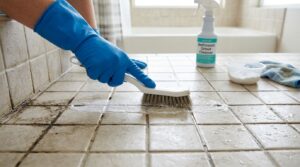
Use a soft to medium bristle brush, like a grout brush or an old soft toothbrush for corners. Scrub in short strokes along the grout line.
Keep pressure steady and controlled. Heavy force can damage grout or strip sealer, especially on older floors.
After grout agitation, wipe the tile with a damp microfiber cloth or mop. Microfiber grabs fine film better than many sponges.
Work in small sections:
One section gets cleaned.
One section gets rinsed.
One section gets dried.
Rinsing is where many DIY cleanings fail. Dirty solution left behind dries into a film, and bathrooms show film fast.
Use clean warm water, change it often, and wipe again until the tile feels squeaky-clean, not slippery.
Use a dry microfiber towel to pull water off the surface. Run the bathroom fan, open the door, and aim for airflow.
This quick-drying habit matters because lingering moisture helps grime and discoloration return sooner.
Some grout lines need a second pass, especially around the shower entry, toilet base, and sink.
Repeat paste and light scrubbing only on the stubborn lines. Avoid turning the whole bathroom into a long scrub session if only a few lines need extra help.
A small routine prevents big buildup:
Weekly: quick wipe-down or mop with a gentle solution
After showers: quick squeegee or towel pass on tile walls (if applicable)
Monthly: targeted grout touch-up on high-splash areas
Bathroom wall tile collects body oils, shampoo residue, and humidity haze. Tile and grout cleaning on vertical surfaces works best when you control drips and prevent dirty solution from running into clean areas.
Start at the top and work down. Use a spray bottle with your gentle cleaner and mist lightly instead of soaking the wall. Next, wipe with a microfiber cloth in straight passes. After that, switch to your grout brush for grout lines only. Finally, rinse with a damp microfiber cloth and dry with a towel.
A small change like this matters because rinsing is harder on walls. If you skip rinsing, a thin film can dry on tile and make the surface look cloudy, especially under bathroom lights.
Tile and grout cleaning in Old Hickory, Tennessee should feel safe in a lived-in home. A few choices tend to cause the biggest problems:
Safe choices in most bathrooms
Warm water and a small amount of mild soap
Baking soda paste for grout lines
Soft to medium bristle brushes
Microfiber cloths and frequent rinsing
Good airflow and quick drying
Risky choices that often backfire
Abrasive powders that scratch tile glaze or roughen grout
Metal brushes or harsh scrub pads that strip grout sealer
Too much soap that leaves a sticky residue and attracts new grime
Over-wetting grout, especially on older floors, because it can drive dirt deeper
Natural stone note
Natural stone can react badly to acidic cleaners and aggressive DIY mixes. If your bathroom has stone tile, keep everything neutral and gentle, and do a small spot test first.
Bathrooms sometimes show black discoloration in grout lines or around corners. Pink film can also appear in damp areas. Cleaning without harsh chemicals still works, however you have to combine the cleaner with better moisture control.
Use your baking soda paste for grout, scrub lightly, rinse thoroughly, and dry. Then improve ventilation. Run the fan longer, keep the door open after showers, and wipe down splash zones. As a result, the surface stays drier and buildup returns more slowly.
If discoloration returns quickly in the same places, grout may be unsealed, worn, or holding deeper residue. At that point, professional tile and grout cleaning can help you reset the surface without risky DIY experimenting. When you want a deeper clean, you can check our service details here and book online anytime.
DIY tile and grout cleaning is great for routine buildup. Still, some situations call for professional tools and technique:
Grout stays dark even after a careful clean and rinse
You see widespread staining across multiple rooms or large bathroom areas
The floor feels sticky even after repeated rinsing
You’re worried about damaging tile, stone, or older grout
You want a deep clean before guests, listing a home, or seasonal refresh
Calling a pro can be the safer move because you avoid trial-and-error products that can cause long-term damage.
Tile and grout cleaning in Old Hickory, Tennessee is about more than a “white grout” look. Bathrooms are small spaces, and even light buildup can make the whole room feel dull. When grout lines darken, the tile often looks older than it really is. Meanwhile, haze from soap scum and hard water can hide shine and make a clean bathroom feel unfinished.
A gentle, thorough clean helps you get that brighter look without filling your home with heavy chemical smells. Instead of blasting the room with harsh products, you focus on lifting grime and rinsing it away. As a result, the bathroom feels cleaner because what you see matches what you smell, and the space feels more comfortable to use day to day.
In Old Hickory homes, bathrooms also deal with seasonal humidity swings. When moisture levels rise, residue and film can build faster. A consistent tile and grout cleaning routine helps you stay ahead of that, so the room doesn’t slip into “deep scrub emergency” mode.
We keep this practical: we don’t promise medical outcomes. However, a bathroom with less grime and less residue usually feels more pleasant to be in. When you remove the film that traps odors and holds onto moisture, the room tends to feel more breathable and simply cleaner.
Tile and grout cleaning also supports a cleaner-looking shower area. A shower surround that’s free of haze reflects light better. Mirrors and fixtures look sharper when the surrounding tile looks fresh. In addition, your cleaning time often drops because routine wipe-downs work better on surfaces that aren’t coated in old residue.
Grout is porous. That porosity is why grout stains, and it’s also why harsh methods can cause long-term problems. Over-scrubbing and aggressive chemicals can roughen grout or strip protective sealers. Once grout gets rougher, it grabs dirt more easily, which creates a frustrating cycle where the grout looks dirty again right after you cleaned it.
A gentle approach protects the surface. When you clean with smart tools and thorough rinsing, you reduce the chance of damage and keep finishes looking better. This matters in bathrooms with textured tile, light-colored grout, or older grout lines that already have wear.
If your bathroom grout is sealed, careful cleaning helps it stay protected. If it’s not sealed, safe cleaning still improves appearance, and it can help you decide whether re-sealing is worth it. Either way, consistent tile and grout cleaning is a long-term maintenance win because it supports the materials you already paid for.
One reason bathrooms feel dirty again quickly is leftover residue. Many common cleaners leave a film, and that film holds onto dust and body oils. Even “nice smelling” cleaners can cause this if they’re too soapy or not rinsed well.
A residue-aware tile and grout cleaning approach reduces repeat problems. You use less product, rinse more carefully, and dry faster. Meanwhile, you focus on airflow and moisture control, which helps prevent that constant cycle of haze on tile and darkening grout lines.
In a busy Old Hickory household, this matters because you want cleaning to last. When a simple weekly wipe-down actually works, you save time and avoid weekend-long scrub sessions.
Bathrooms are one of the first places guests notice, even if they don’t say it. Grout discoloration and cloudy tile can make a clean house feel less polished. On the other hand, bright grout lines and clear tile surfaces make the whole bathroom look newer.
Tile and grout cleaning is also a quick way to boost how your home looks for photos, hosting, or prepping for a move. If you’re getting ready for visitors around Old Hickory, Old Hickory Lake weekends, or seasonal gatherings, a professional tile and grout cleaning refresh can make a big difference fast, especially when you don’t have time to troubleshoot DIY methods.
When your tile and grout cleaning routine is gentle and consistent, maintenance gets easier. Small messes wipe up faster. Soap scum doesn’t get as thick. Grout stays closer to its normal color. Because of that, you don’t feel like you have to “reset” the bathroom every month.
A simple plan looks like this:
Quick wipe-downs after showers
Weekly light cleaning and rinse
Monthly spot attention for grout lines
In addition, you can pair tile and grout cleaning with other smart home refreshes when it makes sense. For example, if you’re doing a seasonal reset, carpet cleaning or upholstery cleaning can help the rest of the home feel as refreshed as the bathroom. The key is keeping each service targeted and practical, so you get a whole-home “clean feel” without overdoing anything.
Sometimes the biggest benefit is confidence. If you’ve tried multiple products and your grout still looks off, it’s easy to keep escalating to stronger and stronger chemicals. That’s where damage risk goes up.
Choosing a careful, family-safe tile and grout cleaning approach helps you avoid that spiral. You start gentle, use the right tools, and watch how the grout responds. If it still doesn’t improve, you have a clear sign that it’s time for professional help instead of another risky experiment.
Bathroom tile and grout cleaning gets harder when moisture hangs around. Steam from hot showers settles into grout lines and corners, then mixes with soap residue and fine dust. As a result, grout can darken even when you feel like you clean “all the time.”
A simple moisture routine helps your cleaning last longer:
Run the exhaust fan during showers and keep it running at least 20 minutes after.
Keep the bathroom door cracked open when possible to help airflow.
Wipe the shower curb, corners, and the base of the tub with a microfiber towel after use.
Use a squeegee on tile walls if you have them, especially in the splash zone.
This is not about making your bathroom feel dry and uncomfortable. It’s about reducing how long water sits on surfaces. Meanwhile, grout stays closer to its natural color because it isn’t constantly absorbing humid air and holding onto film.
In Old Hickory homes where bathrooms can get steamy fast, this single habit can make tile and grout cleaning feel easier week after week, because less moisture usually means less sticky buildup.
One reason DIY tile and grout cleaning fails is the order. Many people attack grout first with a strong product, then end up smearing dirty solution across the tile. Others wash the tile and forget the grout, which leaves dark lines that make the whole floor look dingy.
A better layered routine looks like this:
Dry prep: vacuum or sweep hair and dust before any water.
Surface clean: wipe tile with a gentle solution and microfiber to remove film.
Target grout: apply a mild paste to grout only, then scrub lightly.
Rinse well: use clean water and change it often.
Dry: towel dry, then ventilate.
The key is rinsing. Grout and tile look worse when cleaner residue stays behind. In addition, residue can attract soil, which makes you feel like the grout “never stays clean.” A layered approach removes the film first, then lifts what’s trapped in the grout, and finally rinses everything off the surface.
If you do this consistently, tile and grout cleaning becomes maintenance instead of a weekend project.
Plenty of “natural” cleaning recipes float around online. Some are fine, however some can be risky for grout, tile finishes, or natural stone. For example, very acidic mixes can be rough on certain surfaces, and aggressive abrasives can scratch tile glaze or roughen grout. Meanwhile, heavy fragrance products can leave a film that looks shiny at first, then turns dull.
A practical way to choose family-safer options is to look for reputable guidance on ingredient safety and product labeling. The EPA’s Safer Choice program explains how it identifies products with ingredients that meet safer criteria, which can help you shop with more confidence when you want to avoid harsh chemicals in tight bathroom spaces. You can read more about how it works directly on the EPA site at https://www.epa.gov/saferchoice.
For everyday bathroom tile and grout cleaning, keep it simple:
Avoid overly soapy cleaners that leave residue.
Avoid heavy powders that scratch.
Use neutral or gentle formulas when possible.
Spot test anything new in a hidden corner, especially if your tile is older or specialty.
Also, use the smallest amount of cleaner that works. More product usually means more rinsing, and more rinsing means more moisture sitting in grout lines. A light-touch product choice plus thorough rinsing gives you a cleaner finish with less risk.
Grout is porous, which is why it grabs onto grime. Over time, harsh scrubbing can make grout rougher, and rough grout holds onto more soil. As a result, tile and grout cleaning becomes harder each month.
Instead of scrubbing harder, focus on preventing what causes the grime:
Wipe splash zones weekly before film thickens.
Use a gentle brush with controlled pressure.
Rinse until the tile feels clean, not slippery.
Dry the floor around the tub and toilet base, because those areas collect water and dust.
If your grout is sealed, protect that sealer by avoiding extreme cleaners and abrasive pads. If your grout is not sealed or the sealer is worn, consistent gentle cleaning still helps, and you may decide later whether sealing makes sense for your bathroom.
A helpful maintenance schedule for Old Hickory bathrooms:
Weekly: quick wipe or mop with a mild cleaner and a thorough rinse.
Every 2–4 weeks: grout line touch-up in high-traffic or high-splash areas.
Seasonally: a deeper reset clean, especially before hosting or after humid months.
Recurring dark grout in the same spots can mean there’s deeper residue or worn grout that needs more than DIY. When you see that pattern, scheduling professional tile and grout cleaning can save time and reduce the risk of surface damage from repeated experiments.
If the same bathroom grout lines keep looking dark, the fastest fix is rarely a harsher product. Most repeat issues come from one of these:
Not enough rinsing, leaving residue behind
Moisture hanging around after showers
Soap and body oils building up in a consistent splash pattern
Old grout that has worn down or lost its protective layer
Start by changing one variable at a time. For example, add a longer fan run time for a week, then improve rinsing, then add a quick towel dry after showers. Because you’re changing the system, you’ll see what actually helps instead of guessing.
Here in Old Hickory, Tennessee, we treat tile and grout cleaning the same way we treat every cleaning job: we focus on safer methods, careful technique, and results you can feel good about in your home. Our broader cleaning philosophy was built around a simple belief that professional cleaning should be safe for families and pets without relying on harsh chemicals. We stick to approaches that are hypoallergenic and soap-free, because residue is one of the biggest reasons surfaces look grimy again too quickly.
Our technicians are trained and professional, and we show up with a plan
Bathrooms are detail-heavy. Grout lines change direction, corners collect buildup, and certain spots always get more moisture than others. Our team doesn’t guess. We look at the tile type, the condition of the grout, and the pattern of buildup, then we clean with controlled moisture and the right agitation for the surface.
We believe in removing buildup, not covering it up
Bathrooms can hold onto stubborn films from soaps, shampoos, and hard water. Some products mask odors with fragrance while leaving residue behind. We focus on lifting and removing what’s stuck to the surface, and we take rinsing and residue control seriously. When tile feels clean instead of slick, it stays looking better longer.
A customer-first mindset backed by a satisfaction guarantee
For over 30 years, our company has stayed focused on one thing that hasn’t changed: customer satisfaction. We train, we improve our process, and we do what it takes to make things right when we fall short. We also stand behind our work with a satisfaction guarantee, because we want you to feel confident inviting us into your home.
A quick-drying mindset and low-moisture approach
Bathrooms don’t need extra water sitting in grout lines for hours. Our mindset is to use controlled moisture and efficient technique so your space can get back to normal fast. Low-moisture habits matter because standing water can lead to faster return of discoloration and that “always damp” feeling in corners. We aim for a clean that fits real life, where you can use the bathroom comfortably without worrying about a soggy floor.
Family-safe choices that fit real homes in Old Hickory
We live and work around Old Hickory, and we understand what people want from a service visit: a clean bathroom, straightforward communication, and methods that feel safe in a family home. We keep things practical. We also respect that every bathroom is different, so we adjust the plan based on tile type, grout condition, and the areas that need special attention.
The safest way to start tile and grout cleaning in Old Hickory, Tennessee is to begin with dry prep and a gentle cleaner, then work up only if you need to. Vacuum or sweep first, because hair and dust turn into sludge when they get wet. Next, clean the tile surface with warm water and a small amount of mild soap using microfiber. After that, target grout lines with a baking soda paste and a soft to medium brush. Keep water controlled, rinse often, and dry the area quickly with towels and ventilation. This approach avoids heavy fumes and reduces the risk of damaging grout or dulling tile. Spot testing also matters, especially in older bathrooms or homes with specialty tile. If you’re unsure what type of tile you have, treat it like a delicate surface until proven otherwise. When grime returns fast or grout stays dark after careful rinsing, professional tile and grout cleaning can help you reset the surface without experimenting with stronger products.
Vinegar and lemon get recommended a lot, however they are not always the best choice for tile and grout cleaning in Old Hickory, Tennessee. Acids can react poorly with natural stone and may wear down grout sealer over time. Even on ceramic or porcelain, acidic solutions can sometimes leave the surface looking dull if used too often or not rinsed well. A safer habit for most bathrooms is starting with a neutral or gentle cleaner, then using targeted agitation on grout lines rather than relying on stronger chemistry. If you want a product-based option that still avoids harsh chemicals, consider choosing cleaners aligned with safer ingredient standards, and always rinse thoroughly to prevent residue. The biggest mistake is using any cleaner, natural or not, and then skipping rinsing. If you do use a mild acidic product occasionally on non-stone surfaces, keep it diluted, avoid long dwell time, and rinse with clean water until the tile no longer feels slick. When in doubt, default to gentle methods.
Grout can look dirty after scrubbing because the problem is often residue or moisture, not effort. During tile and grout cleaning in Old Hickory, Tennessee, many DIY routines leave behind cleaner film or dirty rinse water that dries back into the grout lines. Grout is porous, which means it absorbs what you put on it, including over-soapy solutions and dirty water. Another issue is scrubbing too aggressively, which can roughen the grout surface and make it grab dirt faster next time. Focus on controlled moisture, frequent water changes, and thorough rinsing. Use a microfiber wipe after rinsing to pull leftover film off the tile. Drying is also a big deal in bathrooms. If grout stays damp after cleaning, discoloration can return quickly. If you’ve improved rinsing and drying and the grout still stays dark, it may be worn, unsealed, or holding deeper buildup that needs a professional reset.
A realistic schedule helps tile and grout cleaning in Old Hickory, Tennessee stay simple instead of becoming a deep-clean project. For most bathrooms, do a light clean weekly using a gentle solution and microfiber, followed by a clean-water rinse. Every 2 to 4 weeks, add a focused grout touch-up in high-splash areas like the shower entry, around the tub, and near the toilet base. After showers, quick drying habits make a bigger difference than most people expect. Wipe down the shower curb and corners, and run the fan long enough to reduce lingering moisture. Seasonal deep cleans can help after humid months or before hosting, especially if you notice soap scum building up on tile walls. If you’re doing routine maintenance and grout still darkens fast, the issue is usually airflow, residue, or worn grout. In that case, a professional tile and grout cleaning visit can give you a clean baseline that makes weekly upkeep easier.
For tile and grout cleaning in Old Hickory, Tennessee, the best tools are usually the simplest ones that protect the surface. Use microfiber cloths because they lift film instead of smearing it around. Choose a soft to medium grout brush for grout lines and a non-scratch sponge for tile faces. Avoid metal brushes and overly abrasive pads, since they can scratch tile glaze or roughen grout. A spray bottle helps you control moisture on wall tile, which prevents drips from running dirty solution across clean areas. A small handheld squeegee is great for shower walls and helps keep mineral film from building up. Keep a bucket of clean rinse water and change it often, because rinsing with dirty water defeats the point. If you want faster drying, keep a stack of microfiber towels ready and finish by towel-drying the floor and grout lines. When tile is textured or grout is older, gentle tools plus patience usually outperform aggressive scrubbing.
Steam can help with tile and grout cleaning in Old Hickory, Tennessee, however it’s not the best choice for every bathroom. Steam uses heat and moisture, and grout is porous. If grout is worn, unsealed, or cracked, steam can push moisture where you don’t want it, especially around edges and corners. Steam can also affect some sealers or loosen caulk in older showers if you use it too aggressively. If you try steam, keep the tool moving, avoid lingering on one area, and follow with thorough drying and ventilation. Steam also works best as part of a system: dry prep first, light cleaning to remove surface film, then steam for targeted areas, followed by a clean-water wipe and a dry towel finish. If steam leaves your grout looking darker afterward, it’s often moisture sitting in the grout, not a “new stain.” If you consistently struggle with discoloration, professional tile and grout cleaning can provide a deeper reset with controlled technique.
Schedule professional tile and grout cleaning in Old Hickory, Tennessee when DIY stops giving you lasting results or starts feeling risky. If grout stays dark after careful cleaning, rinsing, and drying, the discoloration may be deeper than the surface. If your bathroom floor feels sticky even after multiple rinses, cleaner residue may be trapped and attracting soil. Another sign is repeat buildup in the same spots, especially around the shower entry, toilet base, and corners where moisture collects. Professional cleaning also makes sense before hosting, before selling a home, or after long humid seasons when film and discoloration build up faster. It’s also the safer option if you have specialty tile, older grout, or natural stone and you’re worried about using the wrong product. A professional reset can save you time and protect surfaces, and it usually makes your weekly maintenance routine easier because you’re maintaining a clean baseline instead of fighting years of buildup.

Bathroom tile and grout cleaning in Old Hickory, Tennessee does not have to mean heavy fumes, harsh bleach, or abrasive scrubbing that leaves your arms sore and your grout worse. A gentler approach works when you follow the right order: dry prep, light surface cleaning, targeted grout treatment, thorough rinsing, and quick drying. Those small details protect grout, reduce residue, and help your bathroom stay brighter longer.
If you want to keep things DIY, stick with a routine that fits real life. Run ventilation after showers, wipe down splash zones, and do weekly light cleaning before buildup gets thick. Meanwhile, remember that rinsing is the step that makes results last. When tile feels clean instead of slick, it usually stays looking better.
Recurring dark grout, stubborn film, or a bathroom that never looks fully refreshed can be your sign to bring in help. Our local team can handle the heavy lifting with a careful, family-safe mindset and a focus on results that hold up in everyday homes. You can learn more about our process and choose a time that works for you.
Safe-Dry Carpet Cleaning of Old Hickory, Tennessee is here when you want a deeper clean, less guesswork, and a bathroom that looks refreshed without harsh chemicals. Book your tile and grout cleaning today, and enjoy that clean, comfortable feeling the moment you walk in.